

AI search optimization for travel (GEO, AEO)
Travellers ask AI where to book. Does it send them to you?
The trip used to start on a search results page. Now it starts with an assistant naming two or three sites - and the booking goes to one of them.
We asked both assistants what a traveller would ask.
Asked: Which website is best for booking cheap flights?
Google Flights is the best place to start for most people. It makes comparing dates, nearby airports, and price trends easy, and it offers price alerts.
For the lowest possible fare, I’d also check Skyscanner and KAYAK—recent comparisons found that the cheapest result varies by route.
Best strategy: Google Flights → Skyscanner → KAYAK → check the airline’s own website before booking.
3 brands named
- Google Flights
- Skyscanner
- KAYAK
Asked: Which website is best for booking cheap flights?
There's no single "best" site—it really depends on what you're looking for, but a few consistently rise to the top for finding cheap flights:
Top picks:
- Google Flights – you can find cheap flight deals from United States to anywhere in the world on Google Flights by entering your departure city, choosing Anywhere as the destination, and selecting Explore. It also has excellent price tracking tools that show you the best time to book to get the cheapest price, and can notify you when prices drop.
6 brands named
- Google Flights
- Skyscanner
- Kayak
- Momondo
- Priceline
- Hopper
ChatGPT named 3 brands. Claude named 6. Is yours one of them?
A buyer who asks this never opens a results page. They get a short list, pick from it, and the brands that were not on it never had a chance.
The list is short
An answer names a handful of brands, not ten blue links. Being the eleventh result used to be visible. Being the eleventh brand is invisible.
Each assistant reads differently
ChatGPT and Claude above answered the same question with different brands, because they read different sources. Winning one does not win the other.
It changes every week
Answers move as models update and new pages get cited. A single audit tells you where you stood once; it does not tell you when you dropped out.
Measure it, then put an agent on it
It does the work, not just the report
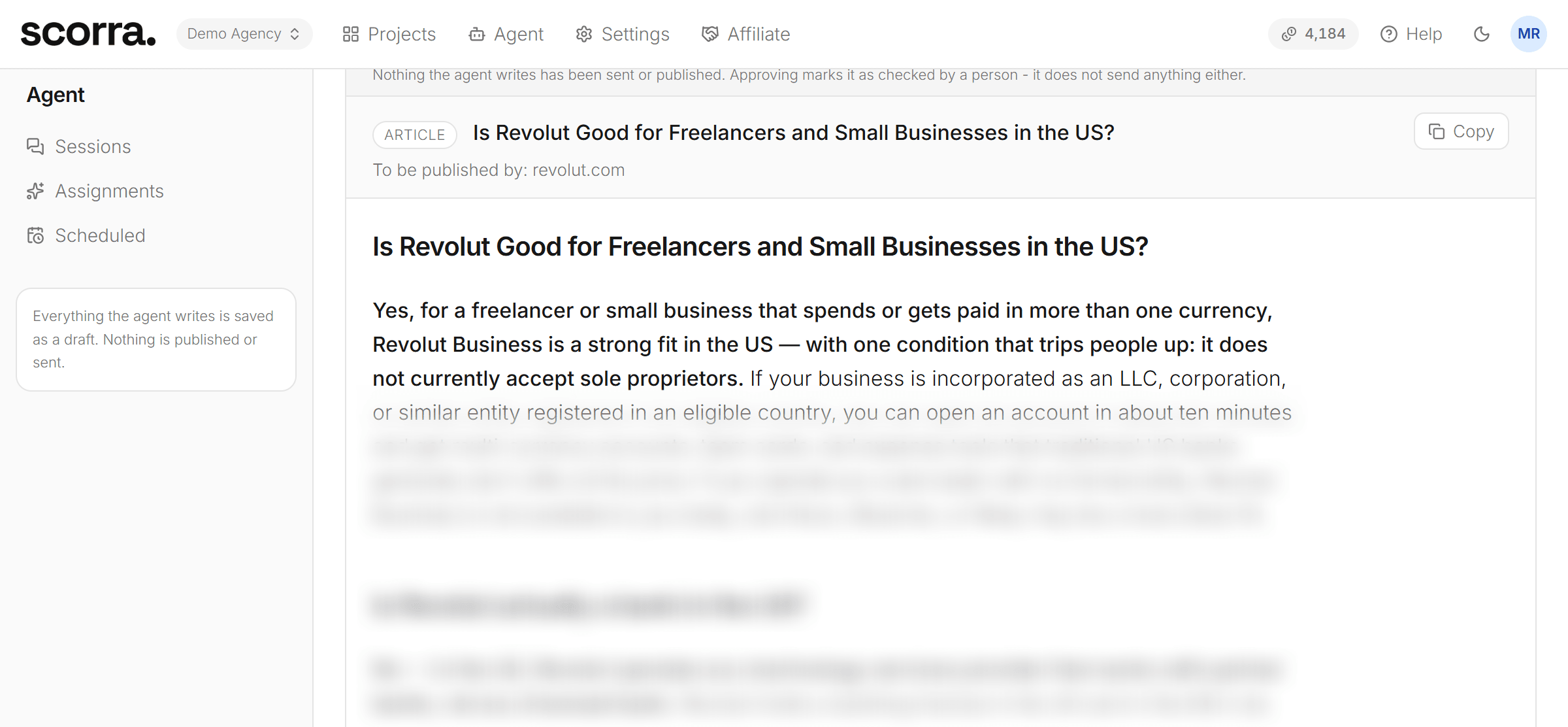
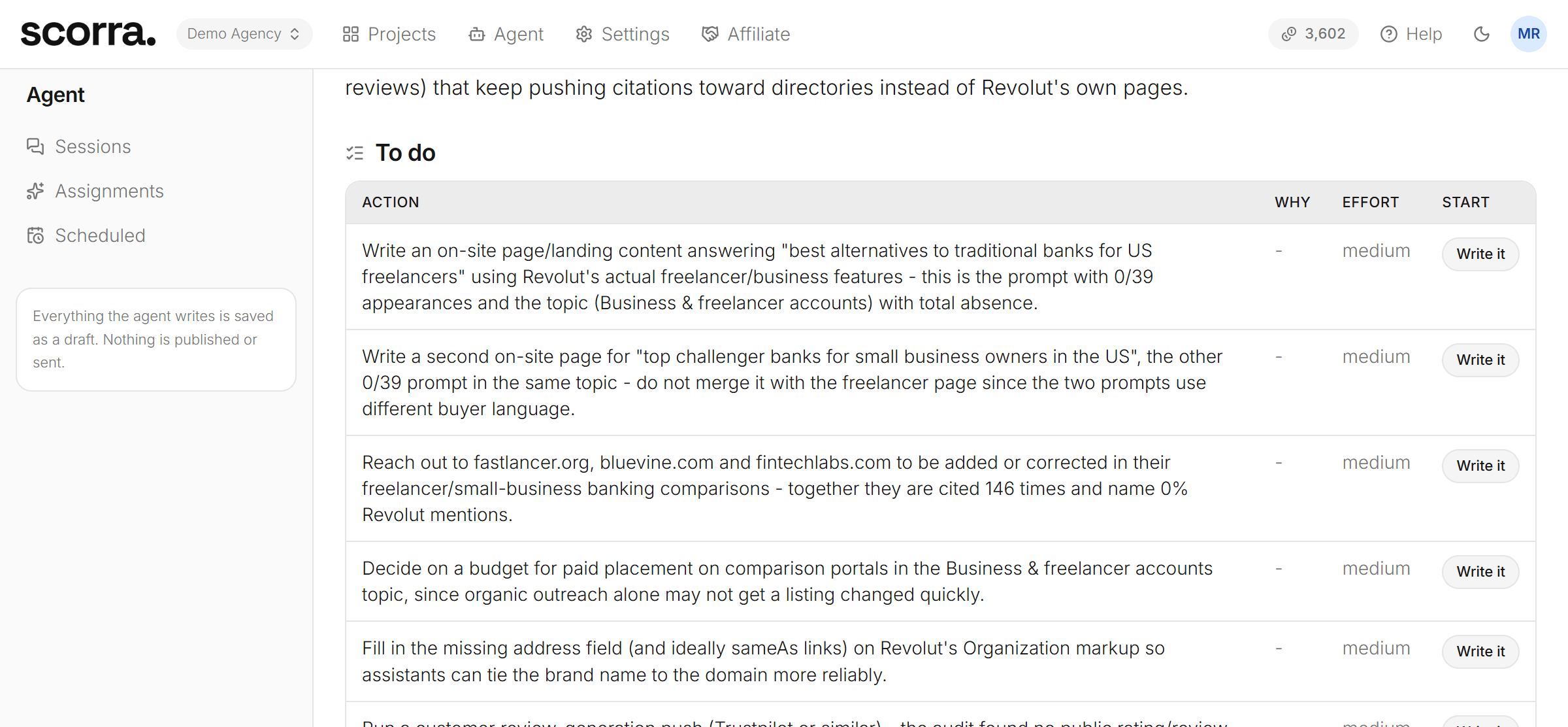
The agent reads what the assistants said about your category, finds the questions you lose and the pages they cite instead of you - and then writes. Briefs and full drafts for your site, a pitch to the publications that keep getting cited, a plan with the effort each step takes.
- Writes the page that answers the question you lose - every number with its source
- Names the exact sites assistants read and never mention you on
- Turns an analysis into a to-do list you can start with one click
- Nothing is published or sent without you
Ask it from Claude or ChatGPT
Connect Scorra once and ask about your visibility from the assistant you already use. The answer comes from your own measurements, not from a guess.
Included from Growth up. Each tool call uses 1 credit.
Learn more →
The questions your buyers ask, every day
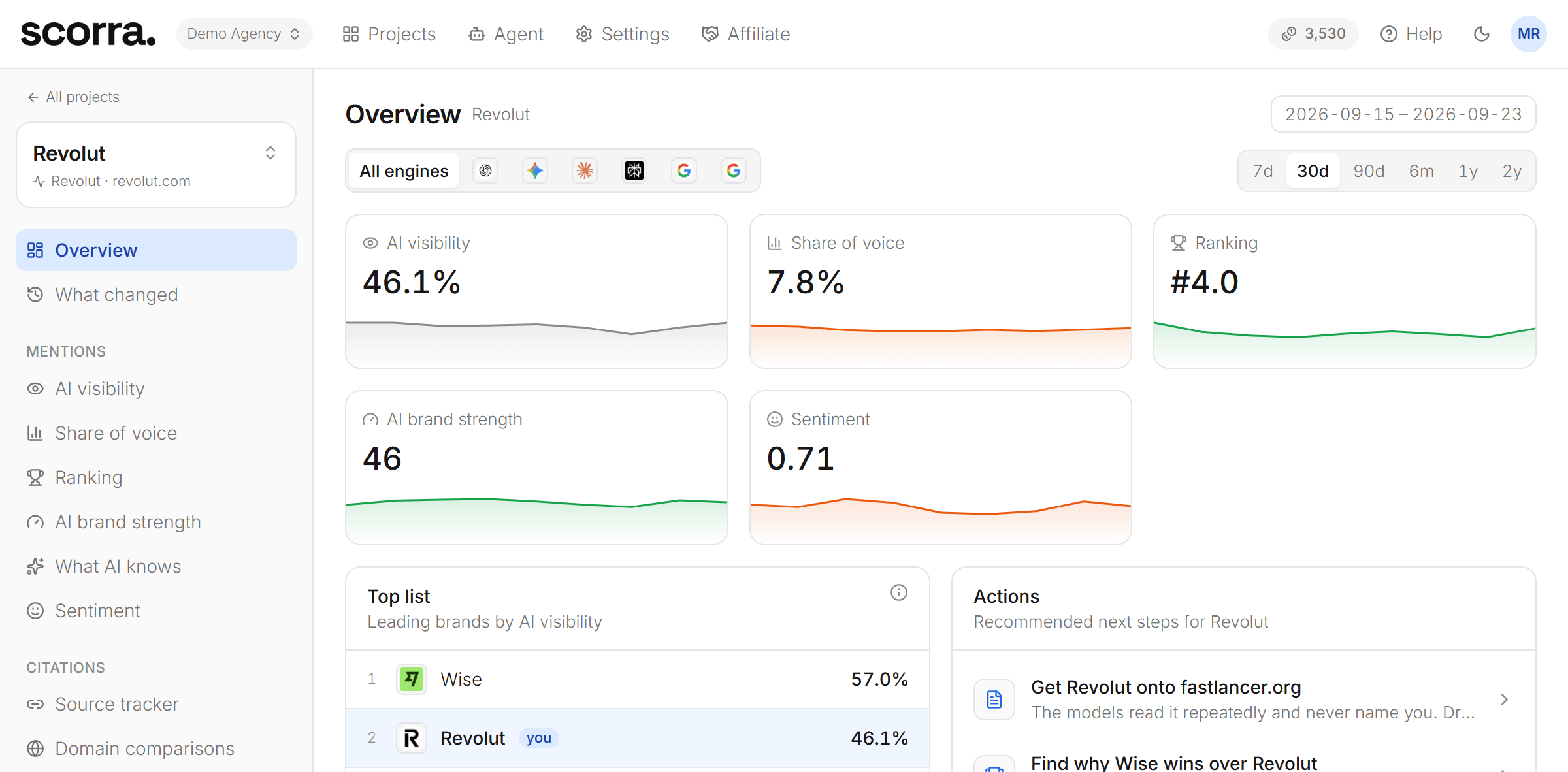
The same questions, asked on ChatGPT, Gemini, Perplexity, Google AI Mode and Google AI Overviews every day - visibility, position, sentiment and the sources behind every answer.
See which answers you are missing
Enter your domain. We ask the assistants the questions your buyers ask and show where you appear - no account needed.